

On occasion, important things remind us that it’s not always the goal at hand, and in my case last week, it was my mom.
To bring some context, my mother is a storied individual. Raised in Dortmund, Germany, or maybe more accurately, born in Germany, and with the advent of WWII, raised in a few different countries as the threat and destruction of war split her and her three siblings away from each other, and from their own mother, to take a train ride to Czechoslovakia, with nothing more than a number scrawled on a small sign hung around her neck, just like all the other children on the train, and having arrived at their destination, pulled away and taken to her new temporary home in the country with strangers she didn’t know, and who didn’t know her.
While in Dortmund, she saw such sights: the destruction of the city by the bombing raids, the glow at night of the fire bombing of Dresden, the Russian soldiers raiding the city and raping civilians, knowing the pain of constant hunger, always looking for food, any food, if that meant you found a bag of rotting, bug infested vegetables that you would gladly cut out the worms in order to have something to bring home and cook, sleeping in all of your clothes so you could run straight to the bomb shelter at night when the bombings began…
And the long march home, when the war finally ended, and her mom came to find her and her siblings, spread out among the cities and country side in various countries, walking the whole way back to Dortmund. Stopping at homes where they watched the long march of people passing before their yard, getting some food when they could spare it, some water, a kind word. Or nothing. And walking. Always walking.
As with all things, this, too, did pass.
She grew up watching the reconstruction of Dortmund. Got a job as a lifeguard, even worked in the local brewery, bringing home a weekly allowance of beer for her family to enjoy. Played in one of the first soccer leagues for women in her town. And remembers how she spent money from her paycheck to buy a dress that she could go out with her friends to the club, for which her step father kicked her out of the house. Permanently.
As a young woman, she traveled to Canada, working various jobs and learning English in a limited way. And that’s when she met my father, an Austrian that had, like her, immigrated to Canada to seek a better future than war torn Europe could provide. And from there, they immigrated to the states, and that is when I came into the picture a number of years later.
But that was almost 59 years ago. Today, my mom is 91 years old. I keep telling her that if life was a class, she’d be getting an A, at which she giggles. She’s since moved back to Canada decades ago, to be closer to her brother and sister, while her oldest sister remained in Germany. And now, she is the only surviving member of her family, unexpectedly outliving every one of her siblings.
For my part, she is the one person I call nearly on a daily basis, even if it’s just to share what we made for dinner or talk about news. And I tell her about technology…
And the latest news, AI. Artificial Intelligence. And even in the last 2 years, what amazing advances the world has seen, tends to dominate these conversations.
If you can imagine, my mother is a woman who has never owned a computer. Nor a laptop, tablet, iPad, smart TV, or smart home device. She hasn’t met Siri. She never met Jeeves. She’s heard of Claude, but only because he was the first AI to escape from an air gapped sandbox and literally emailed the team lead while he was on his lunch break to notify him that he had escaped. (And she wanted to know what that meant, and why everyone was freaking out about it!)
And I tell her about the conversations I have with my own AI assistant.
Various and sundry conversations that span the universe: politics, science, humanity, philosophy, how things work, how things might work, why things don’t work. And my mother listens in amazement as I detail the latest exploits where I ask my assistant anything under and over the heavens, and everything in between, without ever getting a blank stare from my assistant.
And so last week, when she mentioned for the first time that she wished she could talk to an AI assistant too, at 91 years old, that statement, made in passing, didn’t go unnoticed. And thus, the seed planted, I set about bringing to fruition this idea.
Knowing full well the challenge that lay ahead, or so I thought, I selected a smart phone that would be her first, and last, smart device. A device that would be capable of delivering this main objective: to be able to interact with AI. Everything else was secondary, such as setting her up with Netflix and YouTube, no small feature, as streaming on-demand content is still a concept that escapes her. So I selected a phone I could lock down to control what buttons or what areas she might have access to, to just keep her looking at the AI, Netflix, or YouTube icons, and chatting on a messenger service with her friends around Canada and Europe. In other words, I ordered an unlocked Apple iPhone, and set about planning how I would set it up, and ship it to her, so that it would arrive unannounced, a phone that would allow her to start engaging with the modern world.
You know, it’s a funny thing about how you expect things to go, and how reality and technology actually meet up.
For my own background, I’ve grown up around computers. Starting in High School with a Commodore, playing Scott Adams adventures, Zork, the wide world of text based adventures, while learning how to code in Basic. Taking a new computer class in school that had never existed before, learning computer electronics and living in Seattle during a time when Bill Gates was rumored to have said that He could never imagine a PC needing access to more than 640k of ram, working as an electronics tech for places like Boeing, Nintendo, as a system admin for a call center, a computer operator for a mini mainframe, and now, with my involvement in a tech oriented, Software and Compliance as a Service startup. I felt somewhat prepared, in spirit, to get this vision past the goal post.
The ‘80s and ‘90s were a great time to be involved with computers and tech. Back then, the heady expectations and goals, the visions of Bill Gates or Steve Jobs, about what technology meant, about what it would enable users to do. Sure, it was clunky then, running 150 baud - (which means a blistering 150 bits per second) - over a land line phone, the first computer that I put together ran at an amazing clock speed of just under 1 megahertz, and the $300 hard drive that ran the DOS system, and was the size of an average hotel Bible, held a whopping 30 megabytes, I confidently knew I couldn’t possibly fill that in my lifetime. And as clunky as it was, we saw it with better eyes: how networks of computers would be designed for the betterment of humanity and the benefit of enabling the individual user.
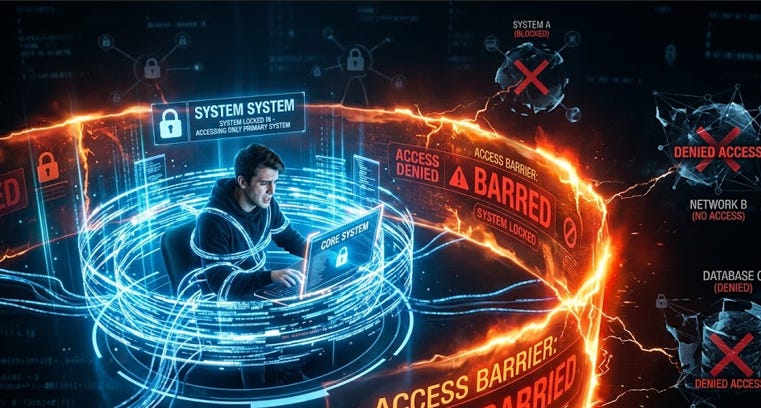
Last week, as my Amazon orders started to arrive, that assumption of enablement being the goal of technology was challenged, and fell by the wayside, having been run over by the forced monetization and walled off access of today’s pigeon holed tech, the funeral on Sunday put to bed any last final thoughts of enablement.
Bill and I cried.
So what happened?
We’ve moved away from the era of radical individual enablement, the early internet, open protocols, buying software once on a CD-ROM and owning it forever, to an era of enclosure and monetization. No physical ownership, rather, it all lives in the cloud. A cloud that sits behind sweet, sweet gated access, yours to be had at a convenience fee billed monthly. A marvelous wireless printer? Of course that tech exists, and it’s so inexpensive. And all you need to do is access the internet to be able to communicate with your printer that’s sitting three feet away, please set up your account and the schedule to automatically ship your ink cartridges as you run out, oh, and please don’t forget to add your billing information, all of which needs to be established before you can use your printer. So many great programs that allow you to unleash your genius, as soon as you create your cloud account, because the software doesn’t sit on your computer anymore, and the great thing about that is that you can access your data from anywhere in the world, as long as you have an account, and can access the cloud, that is. And please don’t forget to update your billing information, and let’s get that 2 factor authentication going, in case you start to feel too secure about understanding technology, and a backup email and phone number, and let’s change out that password once a week to be secure, so your subscription to Horticulture Activism is never hacked! Whoops, you took too long to respond, your session has timed out, you’ll need to start over, using a different log in verification process that’s temporarily been blocked while the system analyzes potentially fraudulent behavior, but you can protest the deletion of your account, and we’ll respond within 2 days after we’ve made our decision. Thank you for your patience.
The enshittification of technology has transitioned the public away from individual enablement, toward walled garden monetization. No longer do you own a tool; now you rent an ecosystem. Software as a Service means you never actually own the software running your business or creative projects, and if the company raises its monthly fees, changes its terms, or shuts down its servers, your access vanishes. Features that used to be standard are increasingly carved out and placed behind premium, tiered paywalls. And that includes interoperability.
Does that system feel likes it been deliberately designed with artificial complexity to force you down a specific path, often ending in a phone call, a support ticket, or an expensive service contract? I hope you don’t believe this lucrative friction point was accidental? There are massive companies that earn 30% - 50% of their revenue simply from handling these support calls generated from artificial complexity built into their software.
The short of it: I had intended to load the programs I knew she would enjoy, the movies and videos and messaging, the cell phone and data coverage, and most of all, the AI assistant that I knew she was dying to engage with, all under her own access, paid for by my CC, allowing me to give her the ultimate “enablement”.
Instead, I was blocked, locked out of accounts, suspended because of suspected fraudulent activity, picking my way through mazes of processes overcomplicated deliberately, and finally, as those hurdles were overcome over hours and days, I finally realized the last hurdle, being able to set up and pay for a cell phone account in Canada for my mom, from the states, is no longer possible. It used to be, but no longer. It was the final blow.
And so I called my mom this Sunday, and told her the great news that she should expect to get an Apple iPhone in the mail. Most of the programs are set up. I’ll just have to walk her through the remainder of the setup, after she calls her phone company and adds the cell phone to her payment plan. (Is that still a gift when they have to pay for their own monthly plan?)
And that she’ll finally be able to have her own daily discussions with her new assistant
.